
Refractive Errors Ayurvedic Treatment for Children
Want your child’s eyes to become healthier and less dependent on stronger spectacles over time? Explore a structured Ayurvedic treatment approach at Matha

Focused Inpatient Care Rooted in Tradition
A Calm, Distraction-Free Environment Focused Solely on Healing
15000+ Satisfied Patients
Experience the best ayurveda wellness experience in Kerala
GMP Certified Manufacturing Unit
Prepare herbal medications in our own GMP certified manufacturing unit
When Your Child’s Spectacle Power or Axis Keeps Changing, Is Waiting the Only Option?
When a child is first prescribed spectacles, most parents accept that the glasses are necessary. The deeper worry usually begins later.
The spectacle power increases again. Cylindrical power is added. The axis changes. One eye develops a different power from the other. The child begins depending more on spectacles for school, reading, television and daily activities.
Parents are commonly advised to repeat the eye test after a few months and replace the spectacles whenever the prescription changes. Clear and correctly prescribed spectacles are important. However, many parents are left with an unanswered question:
Is there anything that can be done for the health of the child’s eyes beyond repeatedly testing the eyes and changing spectacles?
At Matha Ayurveda Eye Hospital, refractive errors are not viewed only as numbers written on a spectacle prescription. Parents need to understand about the biology of the eye first. The cornea, aqueous humour, crystalline lens and vitreous humour are living biological structures inside your child’s eyes. Their transparency, curvature, density, metabolism and coordination influence how light travels through the eye and reaches the retina.
A changing spectacle prescription therefore needs to be studied as part of the child’s overall visual health.
Ayurvedic treatment should not be presented as a magical method that will immediately remove a child’s spectacles. The practical purpose is to understand the type of refractive error, assess its progression, identify associated symptoms and determine whether the health and functional balance of the visual system can be supported.
In suitable cases, treatment may be planned with the following objectives:
- Supporting the biological health of the structures involved in refraction
- Addressing associated complaints such as eye strain, headache, burning or heaviness
- Attempting to control or slow further progression
- Improving visual comfort and functional focusing
- Monitoring whether gradual improvement in spectacle power is possible
- Protecting the child’s existing visual ability during the growing years
The response varies between children. It must be evaluated honestly through eye examinations, spectacle prescriptions, symptoms and long-term follow-up.
Important: A child should not stop wearing spectacles or reduce the prescribed power without proper eye examination and medical advice. Treatment must support the child’s vision, not deprive the child of the correction needed to see clearly.
Understanding Refractive Errors in a Child’s Eyes
Refraction is the first step in the formation of vision
A child sees an object when light reflected from that object enters the eye and reaches the retina.
The light does not travel through the eye in a straight, unchanged line. It bends as it passes from one transparent medium to another. This bending or deviation of light is known as refraction.
Several factors influence refraction, including:
- Transparency of the refractive media
- Curvature of the refractive surfaces
- Density of the media
- Length and shape of the eyeball
- Functional coordination between the structures of the eye
For clear vision, the light rays must finally converge at the appropriate point on the retina. The retina then converts the visual information into biological signals, which are carried to and interpreted by the brain.
When the light does not focus correctly on the retina, the child develops a refractive error.
The four refractive media are living biological structures
Light passes through four important refractive media inside the eye.
The first is the cornea, the transparent outermost layer of the eye. It is spherical and has its own metabolic activities like other living tissues. The curvature and transparency of the cornea play an important role in focusing light.
The second is the aqueous humour, a clear circulating fluid located behind the cornea. It nourishes important structures of the eye and participates in the passage of light.
The third is the crystalline lens. The natural lens inside the eye is not like the glass or plastic lens used in spectacles. It is a biological structure made of living cells. It has its own metabolism and focusing functions.
The fourth is the vitreous humour, a transparent jelly-like substance that fills the posterior portion of the eyeball and helps maintain its shape.
Light first moves from air to the cornea. It then passes through the aqueous humour, crystalline lens and vitreous humour before reaching the retina.
An abnormality in the curvature, density, transparency, metabolism or coordination of these structures may affect the way light is refracted.
This is why refractive errors should not be understood only as an external spectacle problem. The correction written on the spectacle prescription reflects what is required to help light focus properly. It does not always explain why the refractive pattern developed or why it is continuing to change.
Myopia, hypermetropia and astigmatism
The three major refractive errors are myopia, hypermetropia and astigmatism.
Myopia, or short-sightedness, occurs when light focuses in front of the retina. The child may see nearby objects more clearly but have difficulty seeing distant objects, such as writing on a classroom board.
Myopia may also occur when the eyeball becomes longer from front to back. Children with predominantly progressive myopia require specific assessment and long-term monitoring.
Where myopia is the main concern, parents may also read Matha’s dedicated Myopia Ayurvedic Treatment page.
Hypermetropia, or long-sightedness, occurs when light tends to focus beyond the retina. A child may need to make additional focusing effort, especially during reading and other near activities.
Some children compensate for hypermetropia without obvious complaints. Others may develop headache, eye strain, watering, difficulty reading for long periods or avoidance of near work.
Astigmatism occurs when light does not focus at one single point. Instead, the light may be scattered or focused at different points or in different directions.
Astigmatism commonly results from differences in curvature or refractive power in different areas of the eye. The child may experience blurred, shadowed, stretched or distorted vision.
Cylindrical power and axis correction are generally prescribed to compensate for this refractive pattern.
What spherical power, cylindrical power and axis mean
A spectacle prescription may contain spherical power, cylindrical power, an axis value or a combination of these.
Spherical power is commonly used to correct myopia or hypermetropia.
Cylindrical power is prescribed when the eye has astigmatism and does not refract light equally in all directions.
The axis shows the orientation at which cylindrical correction must be positioned.
A change in axis does not mean that the child’s eye has physically rotated. It means that the direction of the cylindrical correction recorded during refraction has changed.
Small differences may sometimes occur because of testing conditions, accommodation, fatigue or natural measurement variation. Repeated or substantial changes, especially when accompanied by worsening vision or discomfort, may require more detailed assessment.
Parents should therefore avoid interpreting one number in isolation. The complete prescription must be considered together with the child’s age, symptoms, previous reports and rate of progression.
Start Your Child’s Ayurvedic Eye Treatment Journey
Share your child’s prescriptions and eye reports so that Matha’s medical team can study the progression and assess whether inpatient Ayurvedic treatment may be suitable.
When Spectacle Power, Cylinder or Axis Keeps Changing
Why repeated spectacle changes make parents feel helpless
The concern is rarely about buying another pair of spectacles.
The real difficulty is watching the child become increasingly dependent on glasses while feeling that nothing is being done except waiting for the next eye test.
Parents may wonder:
- Is the child’s eye becoming weaker?
- Will the spectacle power continue increasing?
- Is cylindrical power more serious than ordinary power?
- Why does the axis keep changing?
- Can the progression be controlled?
- Can the child’s eyes be made healthier?
- Will the child ever be able to use a lower prescription?
These are valid concerns.
Spectacles provide optical correction. They help the child see clearly, learn, read and participate in daily life. They should not be portrayed as harmful merely because the power changes.
At the same time, correcting vision with spectacles and supporting the health of the visual organ are not necessarily the same objective.
Parents may reasonably seek a broader assessment to understand whether anything can be done for the biological and functional health of the child’s eyes.
At Matha, treatment discussions begin by separating realistic clinical possibilities from exaggerated expectations. The purpose is not to force spectacle removal. It is to understand the refractive condition, identify the factors associated with it and determine whether Ayurvedic treatment may contribute to better stability and visual health.
What changes in cylinder and axis may mean
The concern is rarely about buying another pair of spectacles.
The real difficulty is watching the child become increasingly dependent on glasses while feeling that nothing is being done except waiting for the next eye test.
Parents may wonder:
- Is the child’s eye becoming weaker?
- Will the spectacle power continue increasing?
- Is cylindrical power more serious than ordinary power?
- Why does the axis keep changing?
- Can the progression be controlled?
- Can the child’s eyes be made healthier?
- Will the child ever be able to use a lower prescription?
These are valid concerns.
Spectacles provide optical correction. They help the child see clearly, learn, read and participate in daily life. They should not be portrayed as harmful merely because the power changes.
At the same time, correcting vision with spectacles and supporting the health of the visual organ are not necessarily the same objective.
Parents may reasonably seek a broader assessment to understand whether anything can be done for the biological and functional health of the child’s eyes.
At Matha, treatment discussions begin by separating realistic clinical possibilities from exaggerated expectations. The purpose is not to force spectacle removal. It is to understand the refractive condition, identify the factors associated with it and determine whether Ayurvedic treatment may contribute to better stability and visual health.
Symptoms that may exist beyond blurred vision
Not every child describes blurred vision clearly.
A child may not realise that other children see the classroom board more clearly. Younger children may be unable to explain what they are experiencing.
Parents and teachers may instead notice behaviours such as:
- Sitting very close to the television
- Holding books close to the face
- Copying incorrectly from the board
- Avoiding reading
- Losing the place while reading
- Rubbing the eyes frequently
- Squinting to see distant objects
- Blinking repeatedly
- Complaining of headaches after school
- Showing reduced interest in visually demanding activities
Some children experience dullness, heaviness or itching in the eyes. Others experience burning, redness or difficulty tolerating bright light.
There may also be stretching or squeezing discomfort, unstable focusing or difficulty using both eyes comfortably together.
These associated symptoms are important. Two children may have similar spectacle prescriptions but very different functional difficulties.
The spectacle number alone cannot reveal the full experience of the child.
When a detailed assessment may be helpful
Parents may consider a detailed assessment when:
- Spectacle power changes repeatedly
- Myopic power continues to increase
- Cylindrical power or axis changes frequently
- One eye has a much higher power than the other
- The child cannot adjust comfortably to new spectacles
- Headache or eye strain persists
- The child squints or closes one eye
- Reading or classroom performance is affected
- The child has light sensitivity, burning or redness
- There is a family history of progressive refractive error
- The rate of change appears faster than expected
The purpose is not to create fear around every prescription change. Growing children may naturally experience changes in refraction.
The purpose is to distinguish between a child who requires routine monitoring and a child who may benefit from more detailed ophthalmic and Ayurvedic evaluation.
Practical guidance for parents: Keep every old spectacle prescription, eye report and investigation. A chronological comparison of spherical power, cylindrical power and axis is more reliable than trying to remember previous values.
Dr. P. K. Santhakumari, Founder and Chief Physician of Matha Ayurveda Eye Hospitals, talks about Ayurvedic Treatment for Refractive Errors
Ayurvedic Understanding and Matha’s Treatment Approach
The relationship between Kapha and the refractive media
Ayurveda explains the structure and function of the body through the balanced activity of Vata, Pitta and Kapha.
The refractive media, including the cornea, aqueous humour and lens, are understood as having an important relationship with the qualities of Kapha.
Kapha contributes qualities such as stability, structure, smoothness and clarity. An imbalance affecting these structural qualities may be associated with symptoms such as:
- Heaviness of the eyes
- Dullness
- Itching
- Mild headache
- A feeling of reduced freshness in the eyes
This does not mean that every refractive error is simply a Kapha disorder. The physician must study the total pattern rather than assigning treatment based on one symptom.
The child’s constitution, digestion, sleep, appetite, general health, age, habits and eye findings may all influence the clinical assessment.
Vata, movement and visual coordination
Vata governs movement, conduction and coordination.
Within visual function, Vata is understood as having a role in the movement of light, focusing activity, nerve-related function and coordination between different parts of the visual system.
When Vata-related disturbance is prominent, the child may experience:
- Stretching or squeezing pain
- Repeated blinking
- Squinting while focusing
- Difficulty maintaining focus
- Difficulty coordinating both eyes on one point
- Variable or unstable visual comfort
The eye is not studied separately from the rest of the child.
Irregular food habits, insufficient sleep, excessive visual activity, physical strain and an unsettled daily routine may be relevant to the assessment.
Ayurveda therefore looks at both the eye condition and the child’s wider functional state.
Pitta, light perception and sensitivity
Pitta is associated with light, transformation and visual perception.
When Pitta-related disturbance is prominent, the child may experience:
- Burning sensation
- Redness
- A feeling of heat in the eyes
- Intolerance to bright light
- Discomfort after screen exposure
- Difficulty facing sunlight
These symptoms may occur along with myopia, hypermetropia or astigmatism.
However, the refractive diagnosis alone does not explain why one child has burning and light sensitivity while another child has heaviness, itching or repeated blinking.
This is why Ayurvedic treatment cannot be selected merely from the spectacle prescription. The associated symptom pattern helps the physician identify the predominant functional imbalance.
Vata governs movement, conduction and coordination.
Within visual function, Vata is understood as having a role in the movement of light, focusing activity, nerve-related function and coordination between different parts of the visual system.
When Vata-related disturbance is prominent, the child may experience:
- Stretching or squeezing pain
- Repeated blinking
- Squinting while focusing
- Difficulty maintaining focus
- Difficulty coordinating both eyes on one point
- Variable or unstable visual comfort
The eye is not studied separately from the rest of the child.
Irregular food habits, insufficient sleep, excessive visual activity, physical strain and an unsettled daily routine may be relevant to the assessment.
Ayurveda therefore looks at both the eye condition and the child’s wider functional state.
Start Your Child’s Ayurvedic Eye Treatment Journey
Share your child’s prescriptions and eye reports so that Matha’s medical team can study the progression and assess whether inpatient Ayurvedic treatment may be suitable.
Differential diagnosis must come before treatment
The cornea, aqueous humour, crystalline lens and other structures involved in refraction are biological tissues.
Ayurvedic treatment is planned with the intention of supporting the health and functioning of these structures and correcting the broader imbalance identified through examination.
However, no treatment should begin without proper differential diagnosis.
At Matha, a child is not prescribed treatment simply because the spectacle shows minus power, plus power or cylinder.
The medical team studies:
- The child’s current spectacle prescription
- Previous prescriptions and rate of change
- Ophthalmic reports
- Type of refractive error
- Difference between the two eyes
- Associated symptoms
- General medical history
- Constitution and Ayurvedic findings
- Daily routine, sleep and visual strain
- Suitability for inpatient treatment
A treatment plan is considered only after this evaluation.
This protects children from standardised or cookbook treatment. It also protects parents from unrealistic assurances.
Treatment goals must be phased and realistic
The first objective is to determine whether the refractive error is stable or progressing.
The second is to identify and address associated symptoms that may be affecting the child’s visual comfort.
The third is to support the health and functional balance of the visual organ.
The fourth is to monitor whether further progression can be controlled or reduced over time.
In selected cases, gradual improvement in spectacle power may be possible. However, any reduction must be supported by proper refraction and clinical assessment.
Parents should never reduce the spectacle power merely because the child reports temporary improvement during treatment.
The practical outcomes considered may include:
- Greater stability of spectacle power
- Reduction in the rate of progression
- Improvement in eye strain or headache
- Better visual comfort
- Reduced burning, heaviness or irritation
- Better ability to sustain visual activity
- Gradual improvement in prescription where clinically possible
Not every child will experience every outcome. Some children may continue to require the same spectacles even after associated symptoms improve.
Honest expectation-setting is an essential part of treatment.
Treatment goals must be phased and realistic
The first objective is to determine whether the refractive error is stable or progressing.
The second is to identify and address associated symptoms that may be affecting the child’s visual comfort.
The third is to support the health and functional balance of the visual organ.
The fourth is to monitor whether further progression can be controlled or reduced over time.
In selected cases, gradual improvement in spectacle power may be possible. However, any reduction must be supported by proper refraction and clinical assessment.
Parents should never reduce the spectacle power merely because the child reports temporary improvement during treatment.
The practical outcomes considered may include:
Greater stability of spectacle power
Reduction in the rate of progression
Improvement in eye strain or headache
Better visual comfort
Reduced burning, heaviness or irritation
Better ability to sustain visual activity
Gradual improvement in prescription where clinically possible
Not every child will experience every outcome. Some children may continue to require the same spectacles even after associated symptoms improve.
Honest expectation-setting is an essential part of treatment.
Why treatment is not published as a checklist of therapies
Parents searching online may find lists of Ayurvedic eye procedures and assume that a particular procedure is suitable for every child with spectacle power.
This is unsafe and medically inappropriate.
A treatment that may be suitable for a child with heaviness, dullness and itching may not be suitable for a child with burning, redness and severe light sensitivity.
A child with progressive myopia may need a different treatment emphasis from a child with hypermetropia, cylindrical power or focusing strain.
Internal medicines, external medicines, procedures, diet and restrictions must be selected according to:
- The exact diagnosis
- Predominant dosha involvement
- Age and strength of the child
- Stage and progression of the condition
- Associated symptoms
- Response during treatment
- Safety and suitability
Matha therefore does not present Ayurvedic treatment as a do-it-yourself list.
The effectiveness and safety of treatment depend on the correct medicine, correct procedure, correct sequence, correct timing and close medical supervision.
Why inpatient treatment is compulsorily advised
Matha Ayurveda Eye Hospital follows an inpatient-focused approach for serious Ayurvedic eye treatment.
It is not a spa, resort or short wellness programme. Treatment is not combined with tourism or sightseeing.
When a child is medically accepted, inpatient admission may be advised so that the medical team can supervise:
- Treatment procedures
- Internal and external medicines
- Medicine timing
- Diet
- Eye rest
- Sleep routine
- Daily symptoms
- Response to treatment
- Parent and child adherence
The controlled environment reduces many disturbances that are difficult to manage at home.
Continuous mobile use, television, schoolwork, irregular meals, late sleeping and visually demanding entertainment may interfere with the rest required during treatment.
The exact treatment and duration are decided only after medical assessment.
Eye rest is a clinical requirement, not a punishment
Depending on medical advice, reading, writing, screen use and other visually demanding activities may be restricted during treatment.
This can be challenging for children. It can also be challenging for parents who are accustomed to keeping children occupied through phones, tablets and television.
The parent or guardian must actively support the treatment routine.
Eye rest should not be presented to the child as punishment. It is a temporary clinical discipline intended to reduce visual strain and allow treatment to be carried out in a controlled manner.
Matha’s environment is intentionally simple and focused.
The routine may include:
- Timely medicines and treatment
- Controlled food
- Restricted visual activity
- Morning prayer
- Early sleeping and waking
- Limited movement according to advice
- Close observation by the medical team
Comfort is provided, but luxury and entertainment are not the purpose of admission.
Start Your Child’s Ayurvedic Eye Treatment Journey
Share your child’s prescriptions and eye reports so that Matha’s medical team can study the progression and assess whether inpatient Ayurvedic treatment may be suitable.
Handmade medicines used within a supervised plan
A large majority of the medicines used at Matha are prepared in-house for the hospital’s patients.
These medicines are not treated as ordinary retail products or as substitutes for clinical evaluation.
The usefulness of a medicine depends on more than its name. Preparation, indication, dosage, timing, combination and sequence all matter.
Parents should therefore avoid copying another child’s prescription or using products based on online recommendations.
Medicines are integrated into the child’s complete treatment plan and monitored by the medical team.
Follow-up is essential for judging progress
Refractive errors in growing children must be monitored over time.
The relevant question is not only whether the spectacle number reduced immediately after treatment.
The medical team may also consider:
- Has the rate of increase slowed?
- Has the prescription remained stable?
- Has eye strain reduced?
- Are headaches less frequent?
- Is the child more comfortable while reading?
- Has burning, redness or heaviness reduced?
- Has focusing improved?
- What do repeat examinations show?
A single refraction may be affected by testing conditions, accommodation and the child’s cooperation.
Long-term comparison provides a more reliable picture.
Parents should attend follow-up reviews with all previous prescriptions and reports.
How to get ayurvedic treatment for Refractive errors from Matha
1
Medical Evaluation
A detailed review of reports is required before any decision.
2
Admission Planning
Date selection
Unit selection
Room confirmation
3
Beginning Treatment
Treatment starts only after structured planning—not immediately or casually.
What Parents Should Know Before Seeking Treatment
Spectacles may continue to be necessary
Clear vision is important for learning and visual development.
A child who has been prescribed spectacles should continue using them unless a qualified eye professional advises a change.
Ayurvedic treatment should not be promoted as an instant spectacle-removal programme.
Some children may experience greater stability of power. Some may experience improvement in associated symptoms. Some may show gradual changes in prescription. Others may continue to require the same correction.
The outcome must be assessed individually.
The purpose of treatment is to support and protect the child’s visual health—not to create pressure to remove spectacles at any cost.
Ophthalmic examination remains important
Ayurvedic assessment does not eliminate the need for appropriate ophthalmic examination.
Depending on the child’s condition, investigations may include detailed refraction, cycloplegic refraction, retinal examination, corneal assessment or other tests.
Sudden loss of vision, severe eye pain, trauma, marked redness, flashes, floaters, a white reflex, a newly developed squint or rapid visual deterioration requires prompt ophthalmic attention.
Matha may request reports before deciding whether a child can be accepted.
In some cases, the medical team may advise further investigation or conclude that inpatient Ayurvedic treatment is not presently suitable.
The child’s safety and clarity of diagnosis come before admission.
Parental cooperation affects the treatment process
A young child cannot follow a disciplined medical routine without parental support.
The accompanying parent or guardian must help maintain:
- Medicine timing
- Dietary instructions
- Adequate sleep
- Restricted screen use
- Eye rest
- Post-treatment precautions
- Follow-up appointments
Parents should avoid repeatedly testing the child’s vision during admission or constantly asking whether the glasses can now be removed.
Such pressure may make the child anxious and does not provide a reliable medical assessment.
After discharge, families should follow the prescribed rest and activity instructions. Immediate sightseeing, prolonged travel, unrestricted screens and late-night study may interfere with the recovery period.
Matha is place for serious treatment
Matha Ayurveda Eye Hospital is a family-run institution built through three generations of Ayurvedic dedication.
The hospital’s approach is based on clinical responsibility, careful observation, treatment discipline and long-term follow-up.
Matha does not position inpatient care as a holiday or luxury experience.
The environment is designed to remain accessible to ordinary middle-class families while preserving the seriousness required for treatment.
Families who understand the reason for the discipline are better prepared for admission than those expecting entertainment, tourism or resort facilities.
Acceptance begins with medical case review
Not every child who contacts Matha is automatically advised admission.
The first step is to share:
- The child’s age
- Latest spectacle prescription
- Previous prescriptions
- Eye examination reports
- Relevant investigations
- Main symptoms
- Medical history
- Details of progression
An online consultation or medical review may then be arranged.
The purpose of the consultation is to study the case, understand what Ayurveda may realistically offer and determine whether the child can be considered for inpatient treatment.
It is not a guarantee of admission or result.
Only after the medical team issues advice should the family proceed with treatment planning.
The question is not simply whether Ayurveda has a treatment for spectacle power. The correct question is whether this particular child’s refractive condition is suitable for a structured Ayurvedic treatment approach.
Frequently Asked Questions
Can Ayurveda completely remove my child’s spectacles?
No responsible hospital can promise complete spectacle removal for every child. Ayurvedic treatment aims to strengthen and support the health of the child’s visual system, address associated symptoms and help control further progression of spectacle power.
In suitable cases, gradual improvement in spectacle power may also be seen over time. The response differs from child to child and must be assessed through proper eye examination, repeat refraction and follow-up.
Reduction in spectacles power therefore happens in a phased (step-by-step) manner based on how well medicines act on the patient and how the medical advice is being followed.
Is cylindrical power more serious than spherical power
Cylindrical power indicates astigmatism, where light does not focus at one single point. Its importance depends on the amount, axis, symptoms, age and rate of change. It is not automatically more serious, but frequent changes or poor adaptation to spectacles require assessment.
What does a change in spectacle axis mean?
The axis indicates the orientation of cylindrical correction. A change does not mean that the child’s eye has physically rotated. Small variations may occur between examinations, while repeated or substantial changes may require assessment along with the child’s symptoms and corneal findings.
Should my child need to continue wearing spectacles during treatment?
In most cases, yes. Spectacles should be continued so that the child can see clearly and carry on with daily activities comfortably.
Ayurvedic treatment focuses on supporting the health of the eyes and improving the underlying refractive condition. When the power begins to improve, the spectacles can be changed gradually after proper refraction and medical advice.
Can the treatment be done only with medicines at home?
Matha follows an inpatient-focused approach for serious Ayurvedic eye treatment. Medicines alone may not reproduce the effects of supervised procedures, controlled diet, eye rest, treatment timing and daily monitoring. Online consultation is primarily used to evaluate suitability for admission.
How soon can parents know whether treatment is helping?
Some associated symptoms may change during treatment, but the stability of spectacle power often requires follow-up over several months. Progress should be assessed using repeat prescriptions, symptoms and clinical findings rather than relying on one immediate spectacle reading.
Is the treatment the same for every child?
No. Myopia, hypermetropia and astigmatism have different refractive patterns. Even children with similar prescriptions may have different symptoms and Ayurvedic findings. Treatment must be selected after differential diagnosis and cannot be offered as a standard package.
Testimonials
Take the Next Step for Your Child’s Eye Health
When your child’s spectacle power, cylindrical correction or axis keeps changing, waiting for the next pair of spectacles can feel like the only available option.
There is no need to panic. There is also no need to depend on miraculous promises.
A careful assessment can help parents understand:
- The type of refractive error
- The rate of progression
- The meaning of changing power or axis
- Associated symptoms
- The health of the visual system
- Whether Ayurvedic inpatient treatment may be suitable
- What realistic outcomes may be considered
Share your child’s latest and previous spectacle prescriptions, eye reports, symptoms and medical history with Matha Ayurveda Eye Hospital.
The medical team will review the details, explain whether the case can be considered and advise the appropriate next step.
Start Your Child’s Ayurvedic Eye Treatment Journey
Share your child’s prescriptions and eye reports so that Matha’s medical team can study the progression and assess whether inpatient Ayurvedic treatment may be suitable.
Reviews
Ayurvedic Eye Treatment
Matha Ayurveda Eye Hospital, located in Trivandrum, Kerala, has been worlds trusted destination for advanced Ayurvedic eye care for over three generations.
Our Hospitals
Matha has three hospitals in Trivandrum. You can opt for any one of our hospitals, rooms will be provided based on availability. Patients Not just from Kerala, Tamil Nadu, and Karnataka, but across the world regularly visit us for macular edema treatment, especially after allopathic options are exhausted.
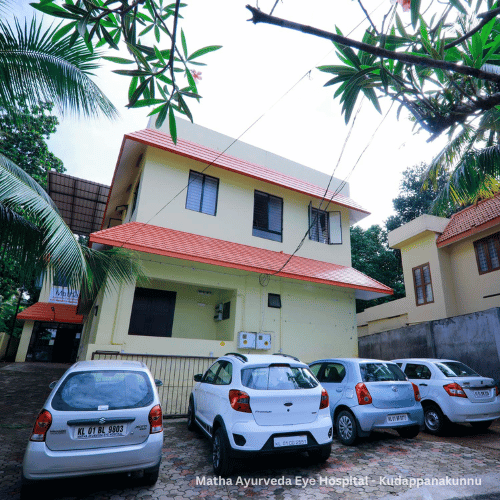
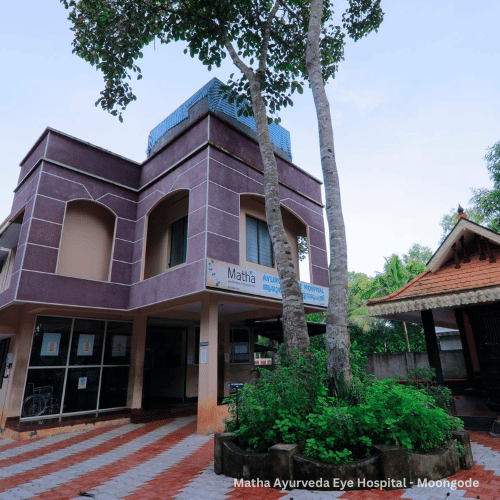
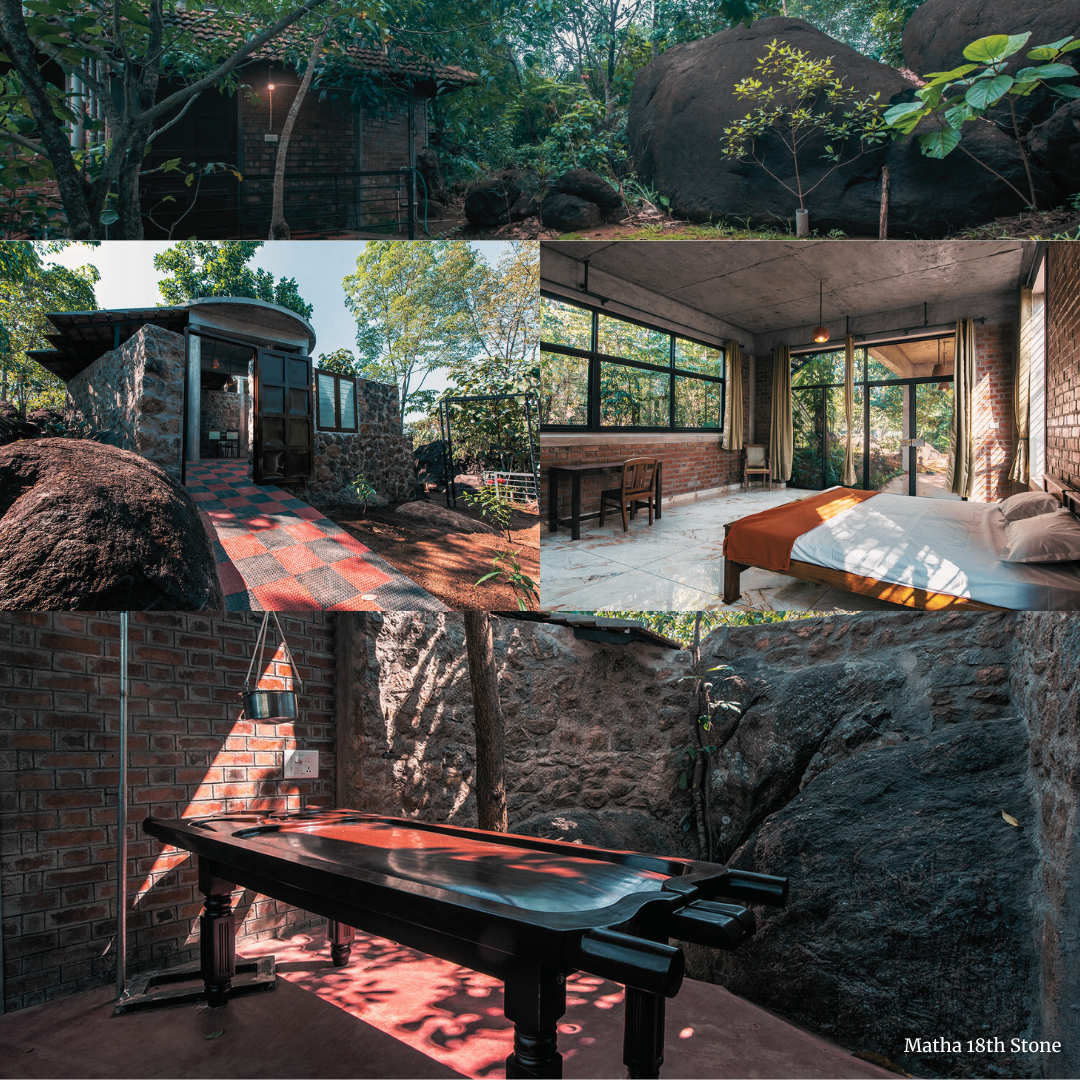
Our Hospitals
Matha Ayurveda Eye Hospital & Panchakarma Centre
Near Civil Station, Jayaprakash Ln, Kudappanakunnu, Thiruvananthapuram, Kerala 695043
Reception: 04712731352
Matha Ayurveda Eye Hospital & Panchakarma Centre
Eye Hospital Road (Moongode - Meppukada Road), Moongode P O Near, Thachottukavu, Kerala 695573
Reception: 9562997799
Contact
OP Timings
9.00 am - 5.00 pm
Appointment only
Important Links